
Two days: old Busan, then the eastern coast
For a first weekend, I’d split Busan into two geographic days: Gamcheon and Nampo on one day; Haedong Yonggungsa and Haeundae on the other. I’ve visited those places, and this route brings together the hillside streets, markets, temple, and sea without crossing the city for every stop.
I especially enjoyed Haedong Yonggungsa’s peaceful setting and sea views. I’d give that visit two to three hours plus transport. Around Nampo, hotteok and dak-kkochi are two food stops I’ve enjoyed, and Jagalchi gives you the seafood-market side of the city.
This plan assumes two full sightseeing days. If you have one full day and a short departure morning, choose either Gamcheon–Nampo or the temple–Haeundae pairing. Put your luggage collection and departure journey into the plan before adding the second area.
Your two-day route at a glance
These are my suggested time allowances, not fixed tour times. Travel, queues, and meals need their own space.
| When | Plan | Time to allow |
|---|---|---|
| Friday evening | Check in; dinner near your accommodation | Keep it simple after traveling |
| Saturday morning | Gamcheon Culture Village | About 2 hours, plus transport |
| Saturday afternoon | Nampo, BIFF Square and Jagalchi | 3–4 hours with lunch |
| Sunday morning | Haedong Yonggungsa Temple | 2–3 hours, plus transport |
| Sunday afternoon | Haeundae Beach and a relaxed meal | 2–3 hours |
If you’re leaving on Sunday, work backwards from your departure before committing to the temple. For a short final day, Haeundae alone is a perfectly good choice.
If Saturday night matters to you: you can head to Gwangalli after the Nampo afternoon for the free drone show. It requires a separate transfer and makes the day longer. The October–February schedule is 7 p.m. and 9 p.m.; March–September is 8 p.m. and 10 p.m., subject to cancellations. I’d shorten shopping or skip another optional stop to fit it in. Check the official schedule.
Choosing where to stay
I’d choose your base before comparing individual hotels. A room that looks like a bargain can feel less useful if it puts you far from the places you want to visit.
Seomyeon: my practical starting point for a weekend split between city exploring and the coast. It’s the interchange for Metro Lines 1 and 2, so look for accommodation within a comfortable walk of the station. Check the actual entrance you’ll use, rather than just the distance to a station pin. Visit Busan route showing the Line 1–2 interchange.
Nampo: worth considering if Gamcheon, markets, and the older waterfront are your priority. You’ll have your Saturday area close by, but Sunday’s eastern coast still needs a deliberate travel plan.
Haeundae: the option I’d look at if waking up near the beach matters most. It makes sense for a coast-focused trip, though it means traveling across the city for Gamcheon. Compare the total price, recent reviews, luggage arrangements, and cancellation terms. I’d also read comments about nighttime noise before booking.
Saturday morning: Gamcheon Culture Village
Gamcheon is one of the places I’ve visited, and I’d put it early in your weekend while you have energy for walking. The colorful hillside is the obvious draw, but give yourself time to explore the smaller lanes instead of rushing to one viewpoint.
Visit Busan’s listed route is Metro Line 1 to Toseong Station, Exit 6, then a village bus—Saha 1-1, Seo-gu 2, or Seo-gu 2-2—to Gamjeong Elementary School, followed by a short walk. Check the stop and direction before boarding. I’d use the bus uphill and save my energy for exploring.
General admission is free; food, souvenirs, parking, and individual paid activities are separate. The tourism listing gives hours of 9am–6pm from March to October and 9am–5pm from November to February. Treat those as visitor-planning hours and check individual facilities separately. This is also a residential neighborhood: keep voices down, leave entrances clear, and respect signs about private areas. Comfortable shoes will matter more than trying to dress for a particular picture.
Saturday afternoon: Nampo, street food and the waterfront
After Gamcheon, I’d head into Nampo for lunch and a change of scenery. Plan a return bus connection from the village rather than assuming the downhill walk is short. Build this part of the day around a few nearby stops rather than another cross-city journey. BIFF Square, the market streets, and Jagalchi give you a different side of Busan from the hillside.
For a snack, look for ssiat hotteok, a sweet griddlecake filled with sugar and seeds. Visit Busan also lists spicy rice cakes, dumplings, and skewers around the Nampo street-food area. Choose what appeals to you and leave enough appetite for a proper meal. If you have allergies, check ingredients directly; a familiar-looking snack can still contain something you need to avoid.
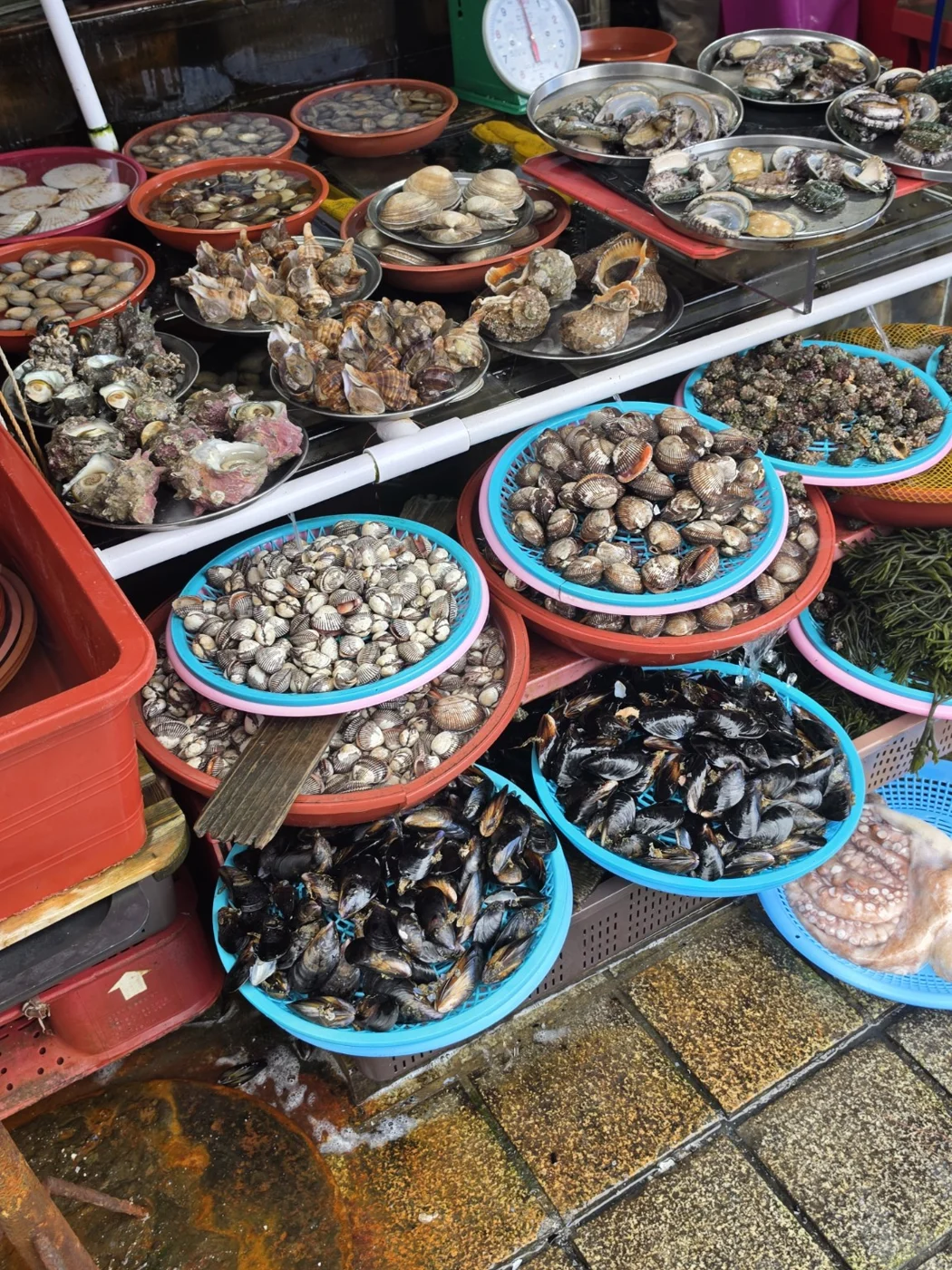
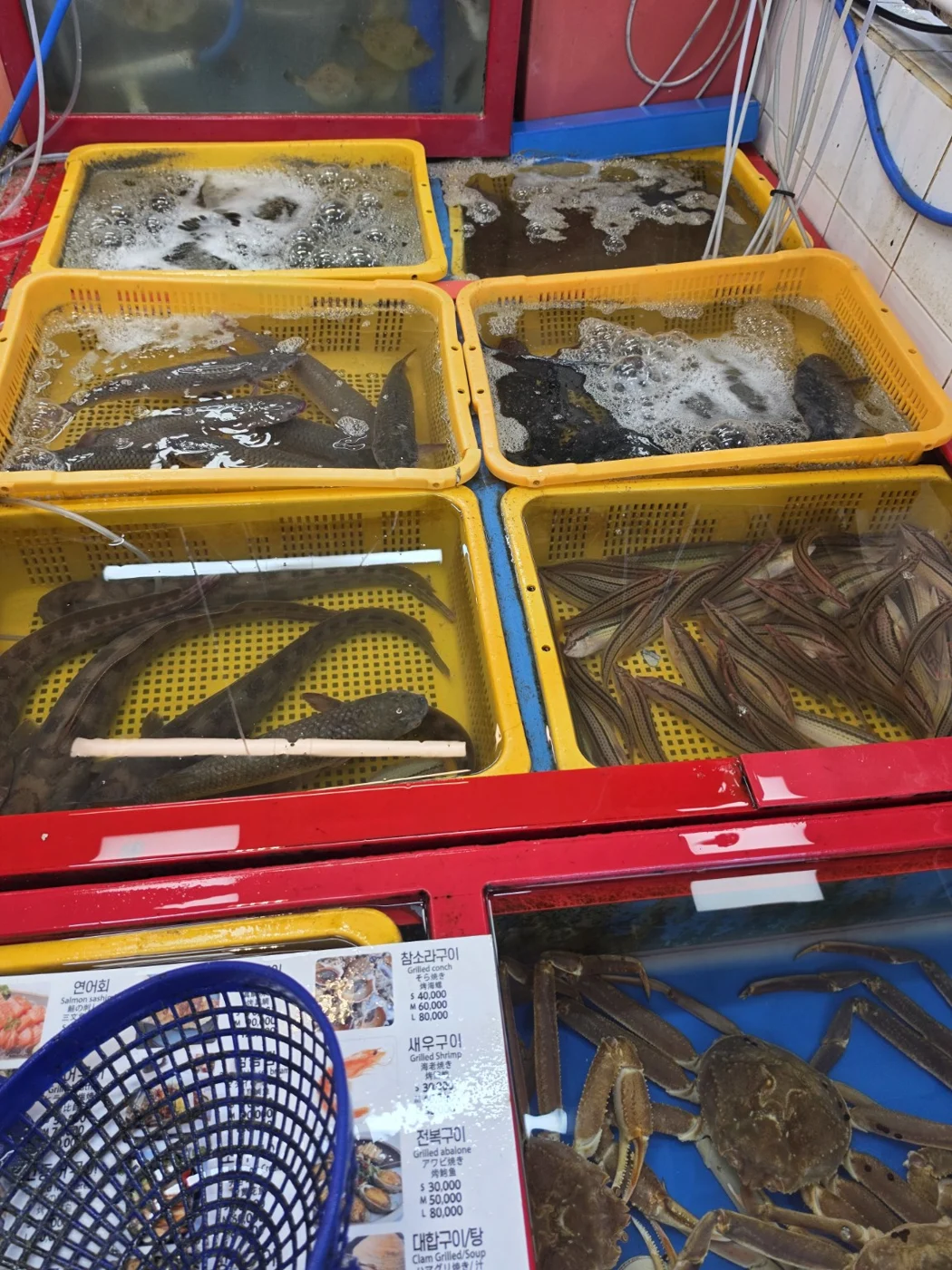
Jagalchi is a seafood market, so it’s a natural stop if seafood interests you. Before ordering, ask what the full meal will cost, what portion you’re buying, and whether preparation or table charges are additional. If seafood isn’t your thing, spend your lunch budget elsewhere and keep the waterfront as a sightseeing stop. You can add the Gukje Market area if you still feel like wandering, but I’d leave shopping optional.
Visit Busan’s Nampo market and street-food route.


Sunday morning: Haedong Yonggungsa Temple
Haedong Yonggungsa was a visit I really enjoyed. The views over the sea and the peaceful atmosphere were the parts that stood out to me. I’d give it a proper morning rather than squeeze it between several other attractions.
Allow around two to three hours for the visit, with transport on top. There are shops and food vendors near the temple, so you can make room for a snack without turning the morning into a rush. Lotte World Adventure Busan is nearby, but I’d make the amusement park a separate priority if you want substantial time there.
The temple involves steps and uneven walking surfaces. If stairs are difficult for you or someone traveling with you, check access arrangements before making the journey. Wear shoes with grip, especially after rain, and give worshippers space.
One option listed by Visit Busan starts from Osiria Station on the Donghae Line, Exit 1, then bus 139 toward Haedong Yonggungsa. Allow for the walk from the stop to the grounds. Compare the full journey from your accommodation, including the transfer back toward Haeundae afterward. Check current connections from your accommodation: this isn’t a temple directly beside a metro exit. Save the return route before you set off, too.
Read my personal temple visit · Official east-coast itinerary and temple access.
Sunday afternoon: give Haeundae some breathing room
After the temple, I’d make Haeundae the last main stop. I’ve visited the beach, and spending time by the water fits the way I like to explore. You don’t have to book an activity to make this part of the weekend worthwhile.
If you’re coming by metro, Haeundae Station is on Line 2; Visit Busan lists a roughly 15-minute walk from Exit 5 to the beach. Official Haeundae Beach directions.
Leave a couple of hours for a beach walk, something to eat, and time to sit down. If you still have energy, extend the walk; if you’ve already done plenty of steps, choose a café and enjoy a slower afternoon. I’d decide that on the day rather than lock in another appointment.
A beach visit and a swimming day need different preparation. Check local notices and conditions before entering the water, and don’t assume lifeguards or swimming facilities operate year-round. If wind or rain makes the waterfront unpleasant, move your meal or café stop indoors. On departure day, leave space to collect luggage and get to your station or airport. The final stretch shouldn’t depend on every connection being perfect.
Getting around: fares, cards and passes
For this route, I’d plan to use public transport and check each journey before leaving. Look at the complete route: station exit, transfer, bus stop, and final walk. A destination can be close on the map and still involve stairs or an uphill approach.
Busan Transportation Corporation currently lists adult metro fares of ₩1,600 for Section 1 and ₩1,800 for Section 2 with a transit card or mobile ticket. Adult single-use QR tickets are ₩1,700 and ₩1,900 respectively. Those are metro fares, not a flat price for every journey in the wider transport network.
Accepted transfer cards include T-money and Cashbee. Transfer discounts have timing and eligibility rules, so check the official guide rather than assuming every connection is free. Keep enough balance for your return journey.
The adult mobile-app metro day pass is listed at ₩6,000. It excludes buses, the Donghae Line, and Busan–Gimhae Light Rail, so it won’t cover this entire itinerary. Compare your actual metro trips before buying: three Section 1 rides cost ₩4,800; four cost ₩6,400. A pass can be useful on a metro-heavy day, while a stored-value card is more flexible for mixed travel.
Official metro fares and pass exclusions · Official transfer rules. Check the timetable for your particular station, direction, and travel date if you’ll be out late.
What I’d budget for the weekend
I’d separate accommodation and getting to Busan from everyday spending. Hotel rates depend heavily on your dates and room choice, so use a live total for your own stay rather than a generic nightly price.
| Expense | Allowance | How to use it |
|---|---|---|
| Example: six metro journeys | ₩9,600–₩10,800 | Illustration, not the total fare for this itinerary; add buses and other rail |
| Two main meals per day | ₩20,000–₩40,000 per day | My starting allowance; inspect actual menus before ordering |
| Coffee and snacks | ₩5,000–₩15,000 per day | Adjust for how often you like to stop |
| Extras | Your choice | Breakfast, taxis, tickets, shopping and special meals need separate room |
Use these estimates as a starting point for your food budget. A seafood meal or several café stops can move your spending well beyond them. I’d keep a small buffer so the weekend still feels flexible. Walking, sightseeing, and a simple meal can make a good day without adding a paid attraction at every stop.
Is the Visit Busan Pass worth it for this route?
For the route as written, I’d start without a pass. Gamcheon’s public streets, markets, the beaches, and Haedong Yonggungsa don’t require attraction tickets. A pass becomes worth comparing when you add several paid activities you want to do anyway.
As checked October 17, 2026, the 24-hour VISIT BUSAN PASS costs ₩55,000 and the 48-hour version ₩85,000. BIG3 costs ₩45,000, with one Group A and two Group B attractions; BIG5 costs ₩65,000, with two Group A and three Group B attractions.
A two-day decision: if you add only Busan Tower and the Haeundae Beach Train, compare their separate tickets first. For a timed pass, make sure all the paid stops fit comfortably within the activated window, including travel and queues. Don’t add a cross-city attraction just to use an inclusion.
The Beach Train is different from the Sky Capsule. Check the exact included product. The physical pass can be loaded with money for transit, but the pass purchase does not pay your bus or metro fares. BIG3/BIG5 give more flexibility across a longer trip; my one-week guide compares that choice.
Current pass prices and attractions · Official attraction groups.
Rain, stairs and a shorter weekend
If the weather turns, swap the order of the days where practical and save the exposed coast for the better window. For steady rain, I’d shorten the outdoor sections and choose indoor food, cafés, or shopping near my base. Gamcheon’s slopes and the temple’s steps deserve extra care when wet.
If you prefer less walking, choose fewer stops and budget for a taxi where it genuinely helps. Being dropped closer won’t remove every staircase inside an attraction, so check accessibility separately. Don’t carry weekend luggage around the hillside or temple; ask your accommodation about storage before checkout.
If you only have one full day, choose the version that interests you most: Gamcheon plus Nampo for hillside streets and markets, or the temple plus Haeundae for the sea. If Sunday is only a few hours long, stay closer to your departure route. I’d much rather enjoy one area properly than spend the last day worrying about missing a train.
What I’d cut for a shorter departure day
A few hours before a train: stay near your departure route and choose one meal or walk. A cross-city temple visit leaves much less room for a delayed connection.
One full sightseeing day: choose Gamcheon–Nampo for the hillside and markets, or Haedong Yonggungsa–Haeundae for the temple and sea. Those pairings are more useful than taking one stop from each side of Busan.
Less walking: keep the beach or market section shorter and use a taxi where it reduces a difficult transfer. A closer drop-off still leaves the steps inside Gamcheon or the temple, so check access before committing.
Luggage after checkout: arrange storage before setting out, and include collection time in the departure plan. I’d leave bags behind for the hillside and temple walks.
The choices I’d make before leaving
I’d book accommodation first, choose whether I wanted the western or eastern side on my shorter day, and save the main transport routes. The core itinerary does not require paid-attraction reservations.
My priority on the temple day would be enough time for the sea views. On the Nampo day, I’d keep lunch and the markets in the same area. That’s the value of the two-day split: you have a plan for getting around, and you can spend the rest of the time enjoying the places.
If you have longer, the seven-day Busan itinerary adds Yeongdo, Jeonpo, a dedicated Gwangalli evening, and more coastal options. For the personal side of these travels, read Finding my feet in Busan.
More pages from the journey
Back to the journal